Mail Forwarding for Snowbirds: Keep Mail Wherever You Go
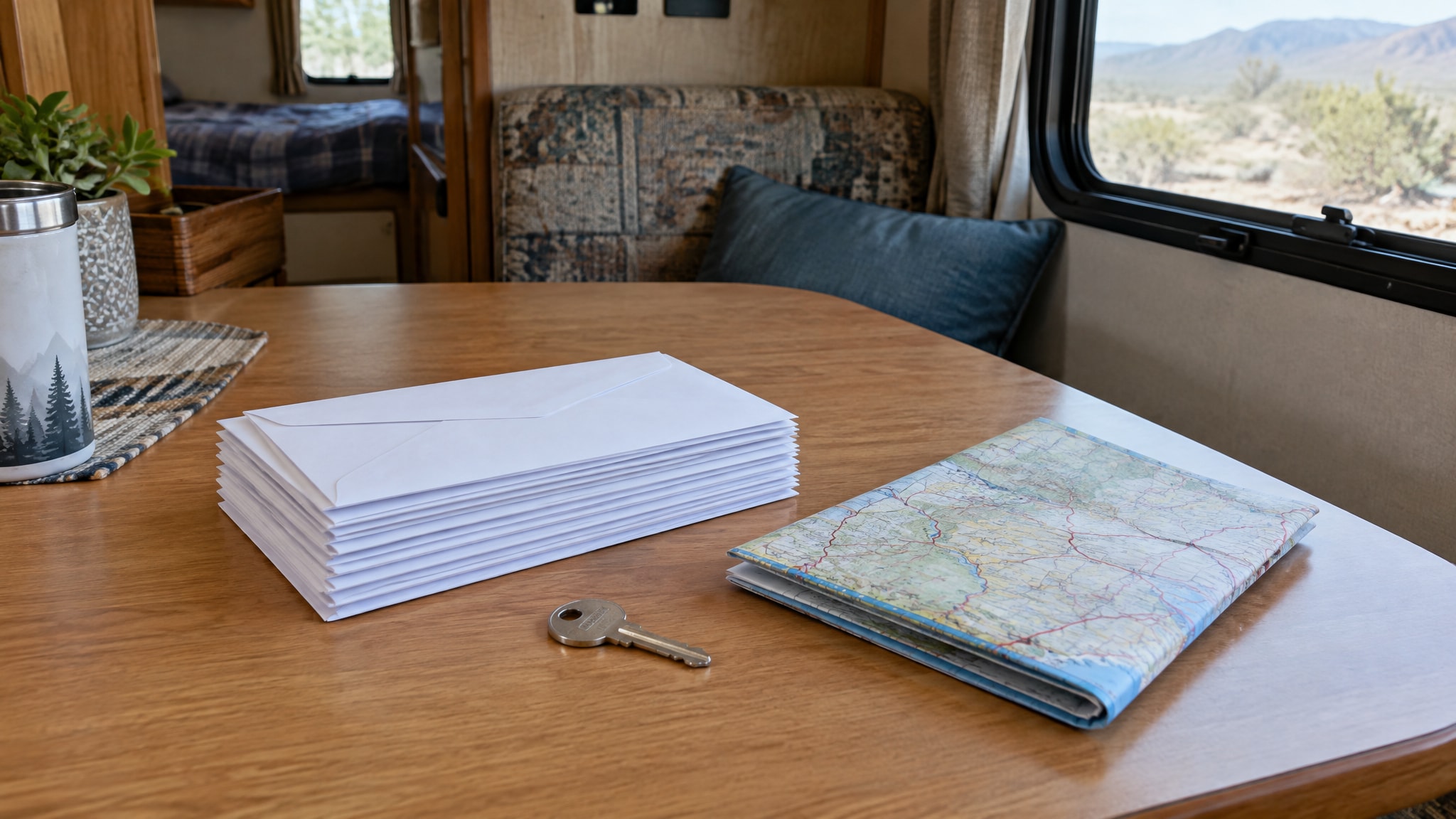
Every snowbird knows the feeling. You're a thousand miles from home, soaking up the sun, and somewhere back north a pile of envelopes is growing in a mailbox. We'll give it to you straight: that pile is the most ordinary problem of winter travel, and it's also one of the easiest to fix.
At EZ Corp Services, we're a family-owned company in Cheyenne, Wyoming, and our mail forwarding service is built for people who are away from home for days, weeks or whole seasons. Here's how mail forwarding for snowbirds works, what it can and can't do, and what to look for before you sign up.
Why Snowbird Mail Piles Up While You're Away
Most of what lands in your box is junk. The rest is the mail that matters: bank statements, insurance renewals, vehicle registration notices, tax forms and the occasional check made out to you.
Take a typical case. A couple keeps their house in one state and spends the winter in an RV in warmer states. A neighbor picks up the mail for a few weeks, then gets tired of it, and the insurance renewal sits in the pile with a due date on it.
Nothing dramatic goes wrong. A bill gets paid late, a notice gets read too late, and a check goes stale.
Two things solve most of it: a stable address that stays put while you move, and a way to see and forward what arrives. Once you have both, the mail stops depending on whoever happens to be home.
Snowbird Mail Forwarding Options, Compared
You have two broad routes. One comes from the post office, and the other comes from a private service. Each suits a different kind of trip, so it's worth weighing them side by side.
Post Office Temporary Forwarding and Where It Stops
The post office route deserves a fair hearing, because it's simple. A temporary change of address tells USPS to send your mail to another address for a stretch of time you choose. You can file it online or at a post office counter, and it costs you very little effort.
USPS has also offered a bundled option called Premium Forwarding Service, which sends all your mail to you on a regular schedule. Check the official USPS site for its current terms and fees before you count on it.
Both options share one limit. They forward mail to a destination you choose, and they don't give you a street address of your own.
That matters on a months-long winter trip. A temporary change of address works well if you know exactly where you'll be sitting for the next few weeks, but it falls short when your route changes, when your stay is open-ended, or when you want to see what's arriving before it lands in your hands. And once the change expires, your mail heads back to the old address whether or not you're home.
Private Mail Forwarding With Scanning
A private forwarding service adds the two things the post office route lacks. The first is a dependable street address that belongs to you and doesn't change when your route does. The second is scanning, so you can look at incoming mail from wherever you are and decide what to do with it.
That second part is the real difference. You see that the insurance renewal arrived, you read it that day, and you choose whether to have the envelope forwarded to your next stop, held or tossed.
A private service costs money, and it isn't free insurance. Weigh the fee against what one missed renewal, one late payment or one lost check would cost you, and the math usually gets clear fast. If you're only gone for three weeks and know where you'll be, the post office may be all you need.
Setting Up Mail Forwarding Before You Leave
Order matters here. If you do these steps in the wrong sequence, mail lands in the old box while you're already on the road.
Start by listing every address and account that sends you mail: banks, credit cards, insurers, the DMV, your doctor's office, the IRS and your state tax agency. Go through a few months of mail to catch the ones you forget. Then update the important senders directly with your new address, because that's far more reliable than depending on any forwarding order.
File any change of address or forwarding order before you leave, not after. Give yourself a few days of cushion so nothing slips through the gap.
Finally, watch the first batch. Once mail starts moving, confirm that it arrives where you expect and that the important pieces haven't gone missing. Catching a problem in week one is much better than discovering it in February.
What Mail Doesn't Get Forwarded
Forwarding isn't a guarantee for every piece of mail, so you should know where the gaps are.
- Bulk marketing mail. It often isn't forwarded, or it arrives weeks late. Most of it you won't miss, but some of it carries notices you would.
- Packages from private carriers. UPS and FedEx deliver to the address on the label. A USPS change of address doesn't redirect them, so give those senders your new address yourself.
- Anything with a deadline. Ballots, renewal notices and court or agency letters can arrive late, and a delay of a week can be the whole problem.
You can catch each of these. Update the sender directly for packages, check your account portals for anything time-sensitive, and use scanning so you see the envelope the day it arrives, not the day it finally reaches you.
RV Mail Forwarding When Your Address Keeps Moving
If you live in an RV, your location changes every few days or weeks. That's the whole appeal, and it's also what makes mail difficult. Nobody can deliver to an address that you leave next Tuesday.
A fixed mailing address with a forwarding routine is steadier than chasing your route. The address stays the same, you set the rhythm of forwarding, and you tell the mail where to go next. For anyone shopping for an RV mail forwarding service, that stability is the point.
Why Campground Addresses Fall Short
Campgrounds will often accept mail for guests, and General Delivery at a local post office will hold it for a limited time. Both can work in a pinch. Neither works well for anything with a deadline.
Campground rules vary, and the office staff may or may not watch for your envelope. General Delivery holds mail only briefly, and then sends it back. If you arrive late, or leave early, the letter may beat you to the next stop or never reach you.
These are short-term fixes, good for one package or one weekend. They can't support a winter of bank, insurance and registration mail.
Scanning changes how you handle the route. You see what arrived, then decide what to send ahead to the next stop and what to leave until you're back. You don't need to forward everything every week, and you won't pay to ship envelopes you never needed to open.
Snowbird Mailing Address vs. Domicile
A snowbird mailing address is where your mail goes. Your domicile is something else, and mixing the two up can cause real trouble.
Why a Mailing Address Isn't Automatically Your Domicile
A mailing address receives mail, and that's all. Domicile follows where you actually live, vote, register your vehicles and file your state taxes. Each state sets its own tests for residence, and many agencies won't accept a mailbox-style address as a residence.
So a mailing address alone rarely settles the question of where you legally live. We can't tell you what your state's tests say, and we can't tell you how a state will see your situation.
What a Wyoming Domicile Means for RV Living
Some RVers and snowbirds choose Wyoming as a home base, and the draw is simple: Wyoming has no state income tax. For people who travel full time, that can be an appealing starting point.
Here is what it doesn't do. A Wyoming address by itself doesn't change your tax obligations in other states, and it doesn't erase ties you still have somewhere else. If you keep a house, vote or register a car in another state, that state may still count you as a resident.
Real ties matter more than the address. A Wyoming domicile for RV living works when your life actually connects to the state, and it works poorly when the address is the only link. We'd steer you away from treating this as a privacy trick. A mailing address isn't a disguise.
Before you act, talk to a tax professional or an attorney about your own case. This is general information, not legal or tax advice.
Two related services come up often here, and they're separate jobs. A Wyoming registered agent service receives legal papers for a business, and it isn't mail forwarding. If you run a business while you travel, what a virtual office address actually gives you is worth reading, and so is forming a Wyoming LLC with a real person if you're weighing that step.
Choosing a Mail Service for Seasonal Travelers
Providers look alike on their websites, so the differences show up in the details. A good mail service for seasonal travelers should answer plain questions plainly, and you can test that before you pay.
If you also work on the road, the same checklist applies. We've written about this in our guide to mail forwarding for truckers.
Questions to Ask Before You Sign Up
Put these to any provider, including us:
- How does scanning work? Find out what you see when mail arrives, how quickly you see it, and what you can do next.
- How is forwarding scheduled? You want to choose when and where mail goes, and you want it to change easily as your route changes.
- How are identity checks handled? Mail receiving services have to verify who you are under postal rules, so expect to provide ID. A provider that skips this step isn't one you want.
- Does a real person answer the phone? Call and find out.
That last test costs you one phone call, and it tells you more than a feature list. If you can't reach a human before you sign up, you probably won't reach one in January when a letter goes missing. Our support is a real person on the phone, not a call center, and we'd like you to hold us to it.
Getting Your Winter Mail Plan in Place
You don't need a complicated plan. You need an address that stays put, a way to see your mail, and a forwarding routine that matches your route.
Set up forwarding for your winter route before you leave, update your key senders, and check that the first batch arrives. EZ Corp's mail forwarding service is built for snowbirds, traveling doctors and nurses, over-the-road truckers and anyone else away from home for days at a time, and you can sign up on that page.
If you'd rather talk first, call us. A real person will pick up, listen to how you travel, and help you sort out your address needs.
Frequently asked questions
How do you temporarily have your mail forwarded?
File a temporary change of address with USPS, either online or at a post office counter. You give the start and end dates and the address where mail should go. A private forwarding service works differently: you get a street address of your own and decide what gets sent on.
How do snowbirds get their mail?
Most use either a USPS temporary change of address or a private mail forwarding service. The post office route sends mail to a destination you pick. A private service gives you a fixed address, scans incoming mail so you can see it, and forwards what you choose to wherever you are.
Can I use a mailing address as my legal residence?
Usually not on its own. A mailing address receives mail, while residence turns on where you actually live, vote, register vehicles and file taxes. Each state sets its own tests, and many agencies won't accept a mailbox-style address as a residence.
Does a Wyoming address mean I stop paying income tax in my home state?
No. Wyoming has no state income tax, but a Wyoming address alone doesn't change what another state may require of you. If you still keep a house, vote or register a vehicle elsewhere, that state may treat you as a resident. Confirm your own case with a tax professional or attorney.